

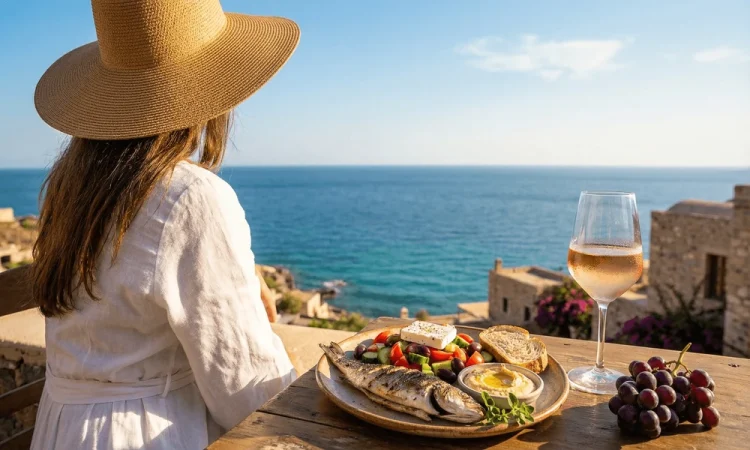
Anyone who has eaten well along the Mediterranean coast knows that the food there has a quality that’s hard to articulate but immediately recognizable. A plate of grilled fish in a Greek port village. A simple pasta with olive oil and clams in a Sicilian fishing town. Tomatoes that taste like tomatoes, bread that’s worth eating on its own, wine that costs less than the water. The cooking is rarely complicated. What makes it extraordinary is the quality of the ingredients and the restraint to let them speak for themselves.
The good news is that the principles behind Mediterranean coastal cooking translate remarkably well to home kitchens, and the ingredients – once you know which ones matter – are far more accessible and affordable than the results would suggest.
What the Mediterranean Diet Actually Is
Before getting into the kitchen, it’s worth separating the Mediterranean diet from its popular representation. It isn’t a restrictive program or a precise set of rules. It’s a pattern of eating that developed over centuries across the coastal regions of southern Europe and North Africa, shaped by geography, climate, and what the land and sea produced.
The foundation is plant-based: vegetables, legumes, whole grains, and fruit make up the bulk of what people eat. Olive oil is the primary fat. Fish and seafood appear regularly, especially in coastal communities. Dairy – mostly cheese and yogurt – shows up in moderate amounts. Meat, particularly red meat, is eaten occasionally rather than daily. Wine accompanies meals in reasonable quantities. What’s largely absent is processed food, added sugar, and the heavy reliance on animal fats that characterizes northern European and American diets.
Travelers who’ve spent time on European cruises through the Mediterranean often come home with a new appreciation for how satisfying this style of eating is – not because it’s virtuous but because it’s genuinely delicious. The challenge is recreating that at home without the backdrop of a sun-drenched terrace.
The Ingredients That Actually Matter
You don’t need to spend a lot to cook Mediterranean food well, but a few ingredients are worth spending on because they have an outsized effect on the final dish.
Olive oil is the most important. A good extra-virgin olive oil used generously – for cooking, for finishing, for dressing – is the single ingredient that most changes the character of Mediterranean cooking. It doesn’t need to be the most expensive bottle on the shelf, but it should be genuinely good. Taste it before you buy it if you can, or choose a single-origin oil from a reputable producer.
Canned fish deserves more respect than it typically gets. High-quality canned sardines, tuna packed in olive oil, and anchovies are staples of Mediterranean coastal cooking and are excellent, versatile, and inexpensive. A pantry stocked with good canned fish is most of the way to a week of Mediterranean meals.
Legumes – chickpeas, white beans, lentils – are the protein backbone of the diet and cost almost nothing. Cooked from dried they’re better than canned; canned are still perfectly good and require almost no effort.
Good tomatoes in season and decent canned tomatoes out of season. Garlic used without restraint. Lemons, always lemons. These are the constants across the regional variations.
Simple Dishes Worth Making
The most transferable Mediterranean dishes are the ones that require the least intervention. A white bean stew with good olive oil, garlic, and canned tomatoes served over bread is dinner in twenty minutes. Grilled fish dressed with lemon and olive oil after cooking is better than anything more complicated. A plate of roasted vegetables – whatever’s in season, cut large, roasted hot – eaten warm or at room temperature as a main course rather than a side dish is the Mediterranean approach to vegetables that most home cooks haven’t tried.
Pasta aglio e olio – spaghetti with olive oil, garlic, red pepper, and parsley – costs almost nothing and is one of the better things you can eat. It requires technique more than ingredients: the garlic has to be cooked carefully, the pasta water has to be incorporated properly, and the whole thing has to come together quickly. It’s worth learning.
Shakshuka, eggs poached in spiced tomato sauce, crosses the North African influence into Mediterranean cooking and is one of the most satisfying inexpensive meals that can be on the table in under thirty minutes.
The Principle That Ties It Together
The underlying logic of Mediterranean coastal cooking is that good ingredients prepared simply and eaten with people you like constitute a genuinely good meal. The sophistication is in the sourcing and the restraint, not the technique.
The best version of this at home isn’t a precise replication of any particular regional cuisine. It’s applying the same logic: find the best ingredients you can reasonably afford, do less to them than you’re tempted to, and eat them at a table rather than on a couch.
That’s more Mediterranean than any specific recipe.