
| Direct Answer
● A capsule hotel gives each guest a private, lockable sleeping pod with shared bathrooms; a hostel gives each guest a bed in a shared dorm room (or a private room), also with shared facilities. ● Capsule pods cost roughly $20–$70 per night; hostel dorm beds run roughly $15–$40 per night — the price gap is often just $2–$10. ● Capsule hotels win on privacy and quiet; hostels win on social interaction and total cost flexibility. ● For solo female travelers and light sleepers, capsule hotels generally offer a safer, quieter baseline experience. |
What Is a Capsule Hotel?
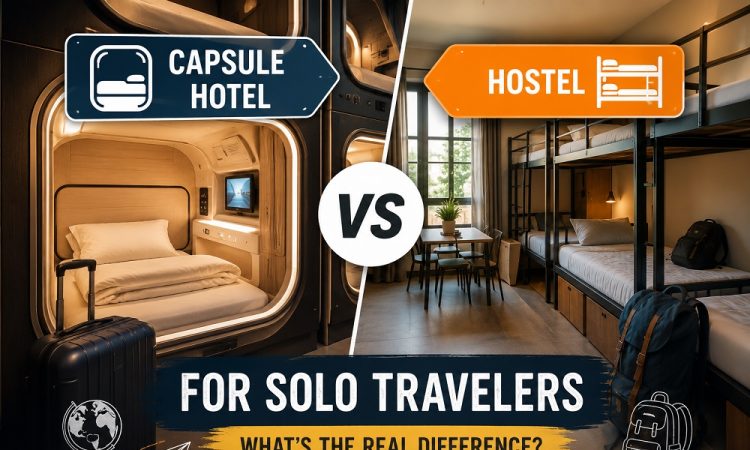
A capsule hotel is a property where guests sleep in compact, individually enclosed pods, usually arranged in stacked rows along a corridor. Each pod is bed-sized, has a locking door or panel, and typically includes lighting, ventilation, and a power outlet. Bathrooms, luggage storage, and common areas are shared. The concept originated in Japan and has since expanded to major cities worldwide, including New York, Montreal, and Hong Kong.
What Is a Hostel?
A hostel is a budget accommodation category built around shared dorm rooms, though most modern hostels also offer private rooms. Guests typically sleep in bunk beds within a shared room, secure valuables in a locker, and share bathrooms and common areas. Hostels are built around social interaction, with common spaces such as bars, kitchens, and lounges designed for guests to meet each other.
Capsule Hotel vs Hostel: Side-by-Side Comparison
| Factor | Capsule Hotel | Hostel (Dorm) |
| Sleeping space | Private, lockable pod | Shared dorm bunk |
| Typical price/night | $20–$70 | $15–$40 |
| Noise level | Low (sound-insulated pod) | Variable, often high |
| Personal security | Pod locks; valuables still shared area | Locker only; bed is exposed |
| Social interaction | Low to moderate | High |
| Bathroom | Shared | Shared (private rooms may include en-suite) |
| Best for | Solo, short stays, privacy priority | Meeting people, longer budget stays |
Which Is Cheaper: Capsule Hotel or Hostel?
Hostels are usually slightly cheaper. In Tokyo, capsule pods average ¥3,000–4,500 per night while hostel dorm beds average ¥2,500–3,500 — a gap of roughly ¥500–1,000 (about $3–$7). In North America, capsule hotels typically start around $62 per night, which can sit above budget hostel dorm rates but below most business hotels. The real cost difference often shows up in add-on fees rather than the base rate.
What Hidden Fees Should You Watch For?
- Tourist tax: commonly $1–$2 per person, per night, charged at checkout in many cities.
- Locker or luggage storage fees, which some properties charge separately from the room rate.
- Towel and amenity rentals, which are sometimes excluded from the advertised price.
- Peak-season and weekend surcharges, which can raise either option’s price by 20%–40%.
Which Is Safer for Solo Travelers?
Capsule hotels generally provide a stronger baseline of personal security. Each pod has a locking door or panel, so a guest’s actual sleeping space is enclosed and private, not just curtained. In a hostel dorm, security relies on a personal locker for valuables, while the bed itself remains open to the room. For solo female travelers specifically, the enclosed and lockable capsule addresses a concern that open or curtained hostel dorms cannot fully resolve, though many hostels now offer female-only dorms as a comparable safety option.
Which Offers More Social Interaction?
Hostels are built for socializing. Common areas such as bars, communal kitchens, and organized events are designed specifically to bring solo travelers together, making hostels the stronger choice for anyone whose main goal is meeting people. Capsule hotels are built around the sleeping unit rather than the common area, so while some include lounges, the culture is generally quieter and more transactional.
Who Should Choose a Capsule Hotel vs a Hostel?
- Choose a capsule hotel if you’re on a short solo stay, prioritize quiet and privacy, or are traveling near a transit hub for a stopover.
- Choose a hostel if meeting other travelers is a primary goal, or if you need the lowest possible nightly rate for a longer stay.
- Choose a hostel private room if you want your own space but still want access to social common areas.
- Choose a capsule hotel if you’re a light sleeper or traveling alone for the first time and want an enclosed space rather than an open or curtained bunk.
Expert Recommendation
Travel accommodation specialists generally advise matching the format to the trip’s purpose rather than price alone, since the nightly rate gap between a capsule pod and a hostel dorm bed is usually small. For a one- to three-night solo stopover, a capsule hotel’s privacy and quiet outweigh the marginal cost difference. For longer budget trips centered on meeting other travelers, a hostel’s common areas and lower long-stay pricing make it the more practical choice. Before booking either, confirm luggage storage size and tourist-tax inclusion directly with the property, since these details vary property to property and are rarely standardized across booking platforms.
| Key Takeaways
● A capsule hotel provides a private, lockable sleeping pod; a hostel provides a shared dorm bed, with shared bathrooms in both formats. ● Price difference is typically small: $2–$10 per night, or roughly ¥500–1,000 in Tokyo. ● Capsule hotels offer better privacy, quiet, and personal security; hostels offer stronger social interaction and lower long-stay costs. ● Solo female travelers and light sleepers generally get a safer, quieter baseline from a capsule hotel or a female-only hostel dorm. ● Always confirm tourist tax, locker fees, and luggage storage limits before booking either option. |
FAQ
Is a capsule hotel more expensive than a hostel?
Slightly. Capsule pods typically cost $2–$10 more per night than a hostel dorm bed, though pricing overlaps significantly by city and season.
Are capsule hotels safe for solo female travelers?
Yes. The lockable, enclosed pod gives solo female travelers a private sleeping space, which addresses a security concern that open or curtained hostel dorms cannot fully resolve.
Do capsule hotels have private bathrooms?
No. Capsule hotels use shared bathrooms and common areas, the same as hostel dorms; only the sleeping pod itself is private.
Can you meet other travelers at a capsule hotel?
It’s possible but less common. Capsule hotels are built around the private sleeping unit, while hostels are designed specifically with shared common areas to encourage social interaction.
Which is better for a one-night stay near an airport or train station?
A capsule hotel is generally the better fit for a short stopover, since it offers private, quiet sleep with minimal cost difference from a hostel dorm bed.
Do hostels offer private rooms like capsule hotels?
Yes. Most modern hostels offer private rooms, some with en-suite bathrooms, in addition to shared dorms, giving solo travelers a middle option between a capsule pod and an open dorm.