

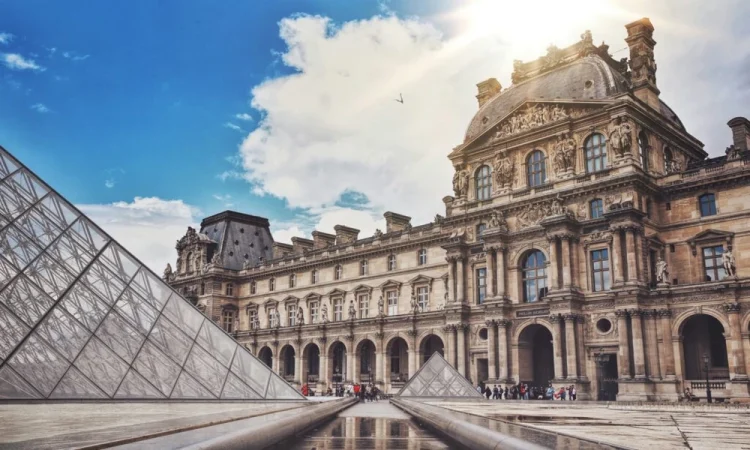
Europe holds one of the highest concentrations of world-class art and museums anywhere on the planet, the result of centuries of wealth, patronage, war, and reinvention all funneling into the same handful of cities. For travelers who plan trips around gallery walls as much as around landmarks, the challenge isn’t finding good museums in Europe – it’s narrowing down which ones are actually worth the limited time you have. Here’s a guide to the destinations that consistently reward art lovers, and how to think about visiting more than one without exhausting yourself in the process.
The Challenge of Seeing It All
The trouble with European art travel is that the best collections aren’t clustered in one country. The Prado is in Madrid, the Uffizi in Florence, the Rijksmuseum in Amsterdam, and the Vatican Museums in Rome – meaning a serious art itinerary can easily require four or five separate flights and hotel changes if planned the traditional way. This is one of the reasons multi-port itineraries, including European cruises that call at several art capitals in a single trip, have become a practical way to see the Prado one week and the Uffizi a few days later without the usual routing headaches of piecing together short-haul flights between them.
Florence, Italy
Florence is arguably the single best city in the world for Renaissance art, and it’s not close. The Uffizi Gallery houses Botticelli’s The Birth of Venus and works by Michelangelo, Leonardo da Vinci, and Raphael, while the Galleria dell’Accademia holds Michelangelo’s David – a sculpture that photos genuinely do not prepare you for in person. Beyond the two headline museums, the Palazzo Pitti and the Bargello round out a city where world-changing art is practically stacked on every corner.
Madrid, Spain
Madrid’s “Golden Triangle of Art” – the Prado, the Reina Sofía, and the Thyssen-Bornemisza – sits within easy walking distance of each other, making it one of the most efficient art cities in Europe to visit. The Prado alone holds an enormous collection of Spanish masters including Velázquez and Goya, while the Reina Sofía is home to Picasso’s Guernica, a piece that carries far more emotional weight in person than any reproduction conveys.
If you want a sense of how these institutions stack up globally before you go, the Art Newspaper publishes an annual ranking of the world’s most-visited art museums, which consistently places several European institutions at the top.
Amsterdam, Netherlands
Amsterdam punches well above its size for art density. The Rijksmuseum covers the full sweep of Dutch history and art, anchored by Rembrandt’s The Night Watch, while the Van Gogh Museum holds the largest collection of the artist’s work anywhere in the world, including pieces that trace his entire, often turbulent, creative arc. The nearby Stedelijk Museum adds a modern and contemporary counterpoint, making Amsterdam a rare city where you can move from the 1600s to the 21st century within a single afternoon.
Vienna, Austria
Vienna’s museums tell the story of an empire that once sat at the center of European power. The Kunsthistorisches Museum houses one of the world’s great collections of Old Masters, while the Belvedere Palace is home to Gustav Klimt’s The Kiss, one of the most recognizable paintings of the early 20th century. Vienna’s museum quarter, the MuseumsQuartier, also packs in contemporary art spaces, making it a city that rewards both classical and modern art lovers in equal measure.
Rome, Italy
Rome’s art scene is inseparable from its religious and political history. The Vatican Museums, culminating in the Sistine Chapel, represent one of the most significant single collections of art anywhere in the world, and the sheer scale of Michelangelo’s ceiling is something no photograph adequately communicates. Beyond the Vatican, the Galleria Borghese offers a more intimate but equally impressive collection, including Bernini sculptures that rival anything in the city’s larger institutions.
How to Actually Plan This Without Burning Out
Museum fatigue is real, and it tends to hit hardest when travelers try to “complete” a city’s art scene in a single visit. A few practical guidelines help:
- Pick one or two must-see museums per city, rather than trying to hit every major institution.
- Book timed entry tickets in advance for high-demand sites like the Uffizi and the Vatican Museums, where walk-up lines can eat hours of your day.
- Build in a non-museum day between art-heavy stops so the art itself stays memorable instead of blurring together.
Art Worth Crossing an Ocean For
What makes these cities special isn’t just the individual masterpieces – it’s the density. Few other places in the world let you go from Renaissance sculpture to Dutch Golden Age painting to Klimt’s gold-leaf portraits within the span of a single trip. For art lovers, that concentration is the real draw of European travel, and it’s worth building an itinerary that actually respects how much there is to take in.

